
I have always been fascinated by the cycle of water, from precipitation into creeks, then rivers, flowing into the sea carrying silt and nutrients, the cycles of the ocean swirling around our planet, evaporation to create clouds and start the whole cycle again.
One of the most amazing things is how waters don’t merge at once when they meet. This is particularly obvious at the confluence of large rivers. The first time I experienced this was in at Manaus, Brazil, where the Rio Negro (black river) meets the Amazon (see image above).
I was fortunate to be in a small boat that I could slide into the choppy waters and feel the difference on my skin. One warm, the other cooler. One clean, the other gritty. I tried not to think of what creatures might be swimming alongside or beneath me. I might have acted differently if I’d been circling South America in the other direction and already witnessed the boiling of piranhas in a feeding frenzy!
Enough of South America though. This post is really about the confluence of the Darling and Murray rivers in Australia, collecting water from what is known as the Murray Darling Basin, an area of more than a million square kilometres, more than the combined size of France and Germany.

I was on a trip with a friend to Lake Mungo (more of that in the next post) and visited Wentworth on the way. I didn’t swim in the confluence this time, with water temperatures below 20C, but the appearance was similar with black and brown waters travelling alongside each other.
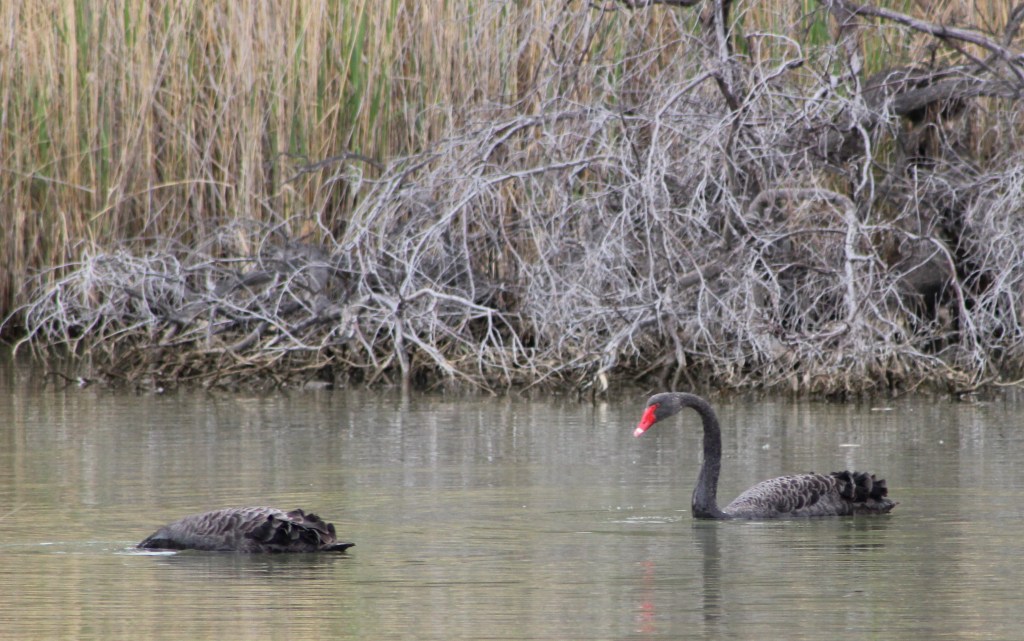
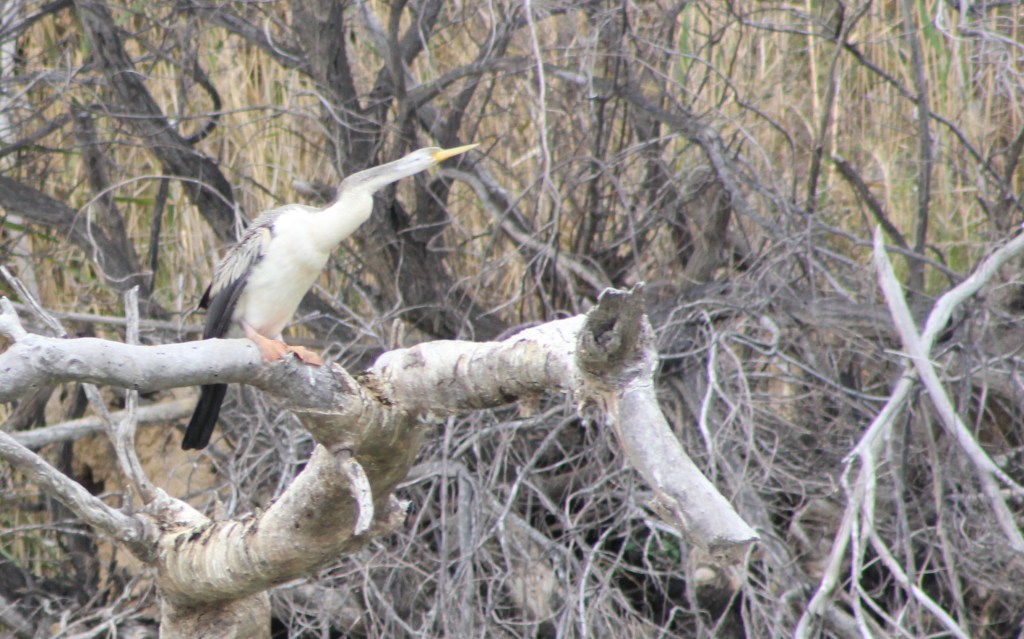
My friend and I spent a couple of days in Mildura before venturing to join our Lake Mungo tour and used the opportunity for a paddleboat cruise along the Murray. What struck me first was the abundant birdlife, a treat after driving for two days from home across vast flat plains of rape-seed oil fields, wheat and barley, through Mallee scrub and orchards of olives, oranges and pistachios, all irrigated from the mighty Murray system. I couldn’t help but reflect on the imbalance of humanity’s need for food versus leaving water for the natural cycle of life. There are no easy answers.

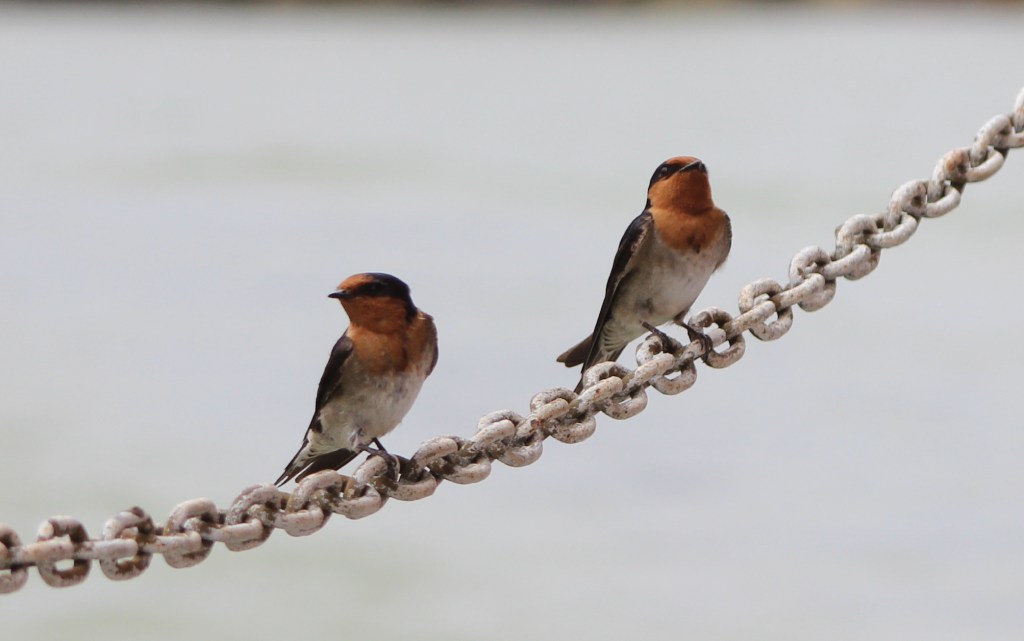
Another noticeable difference was on the two sides of the river. The northern New South Wales bank was completely dominated by waterside mansions with sloping green lawns and boat jetties. The no-man’s land of the southern bank, before the official start of Victoria, was natural bush. This is where the birds nested, glided overhead or posed on sunken trees to wait for the next meal to pass by. The birds knew where to live, and it wasn’t on the side of the flashy mansions.



 Paula Boer
Beautiful Pictures. Important Post.
Eating habits drive irrigation that’s draining Australia’s rivers, and too much of that food ends up in the bin. That disconnect needs fixing.
LikeLike