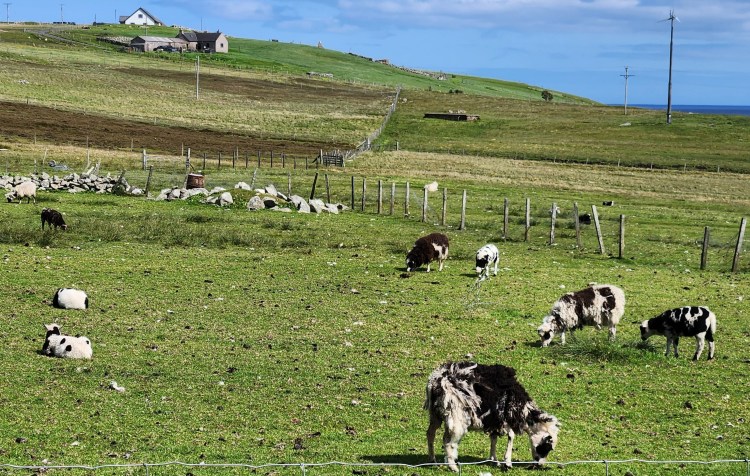
Having watched all the Shetland TV programs (fictional detective series), and visited the South Shetland Islands in Antarctica, I was keen to visit the Shetland Islands in Scotland. They didn’t disappoint. As we drove the single-lane roads through treeless heath lands, between rock walls failing to keep in shaggy sheep, I felt as if I were part of a murder mystery.
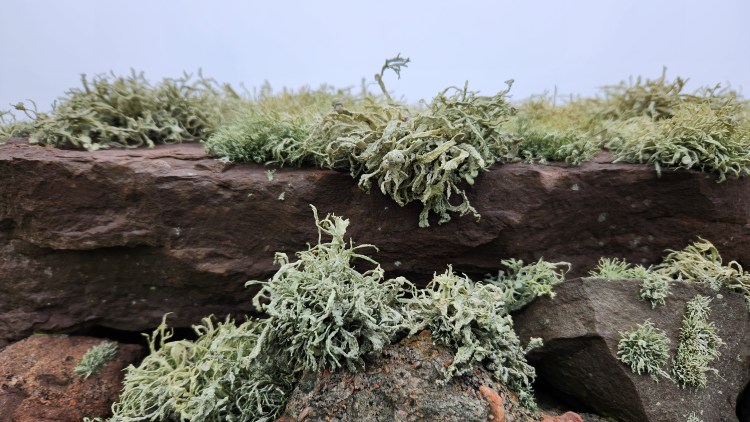
Misty vistas and blowing gales, and days 23 hours long with only a dimming of the light for the remaining hour, tested my endurance as we hiked the hills on a search for rare flowers and quietly scrambled over rocky shorelines in the hope of sneaking up on feeding otters.
Our guide, James Rogerson, gave expert commentary on plants, birds and other animals we encountered, as well as the history of the islands and the local culture. Nothing was too much trouble for him to help us make the most of our time exploring the various islands, including sharing his 16-acre home with us where he has planted 10,000 trees to regenerate the native woodlands that covered this northernmost area of Scotland until 4,000 years ago.
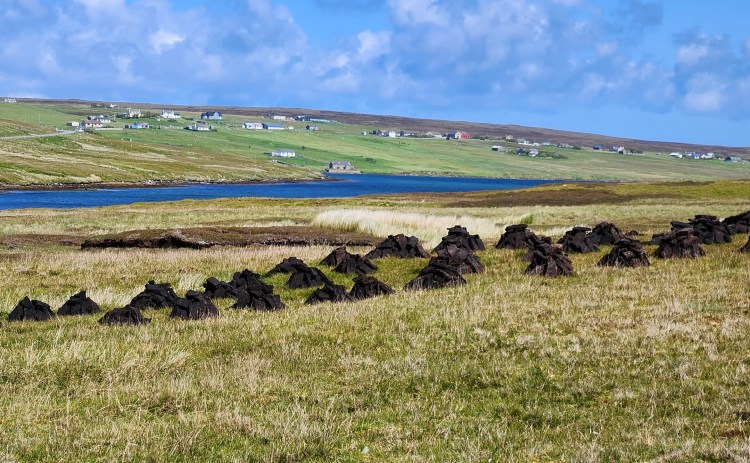
Since the destruction of the forests for grazing, peat has been cut for fuel, also degrading the land from its natural state. Small areas are slowly being repaired to allow the thick heaths and heathers to flourish, holding water and carbon in place and enabling the diversity of plants to return.
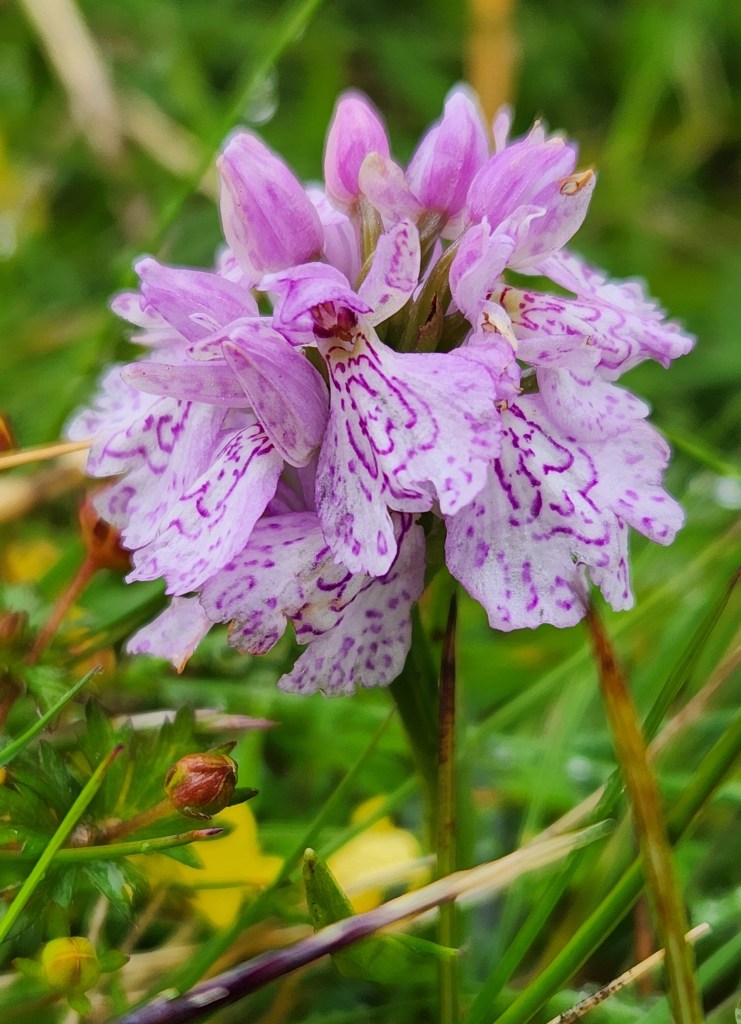
I was struck by the lack of insects, despite being mid-summer when I visited. A few Red Admiral butterflies and the occasional bee caught my eye. I only saw three spiders (for which I have a passion) in my entire visit and a single frog (introduced). But wildflowers abound: tiny orchids, fields of bog cotton (cotton grass), sundews, mosses, worts and vetches, the list goes on. Most are so tiny it is necessary to kneel down to see their beauty.
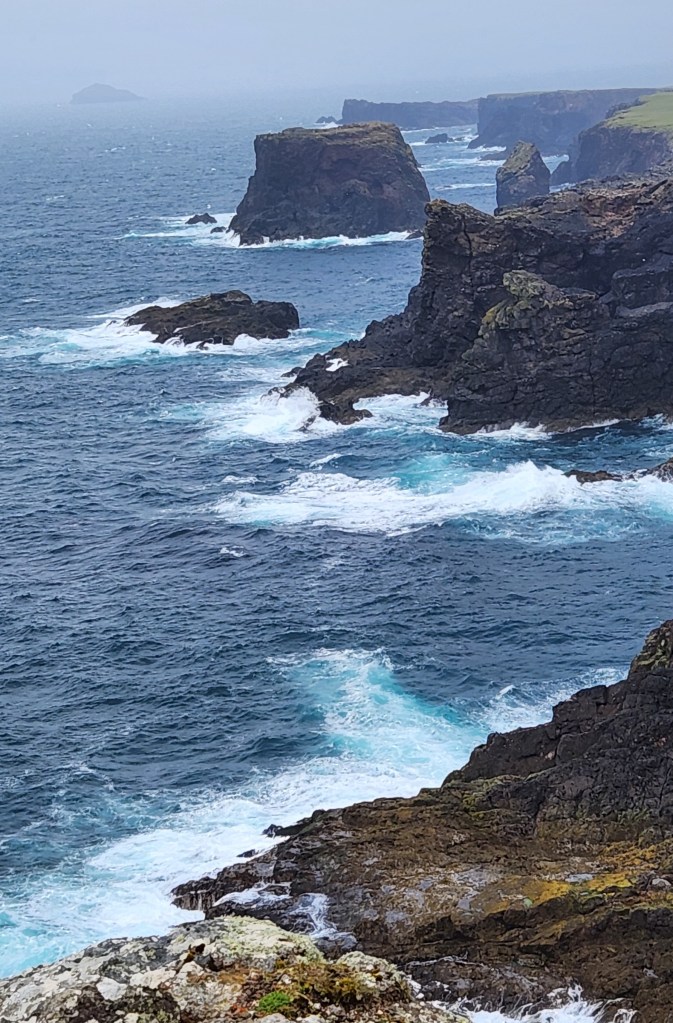
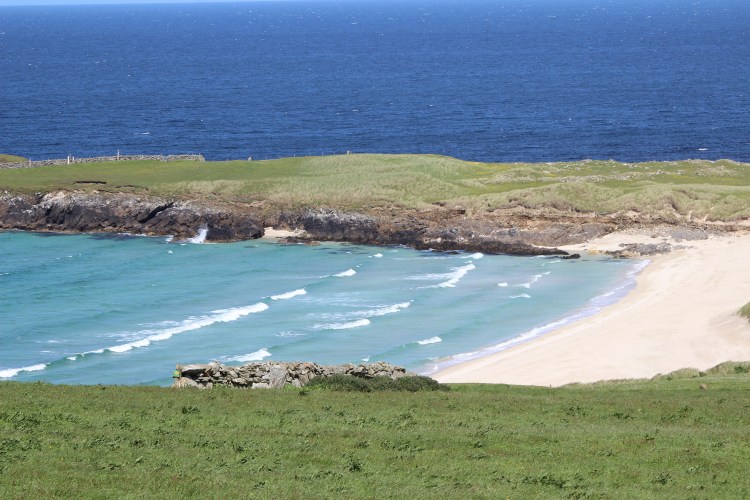
The natural beauty of towering clifftops and sandy beaches is sadly marred in remote places by plastic pollution from the salmon and mussel farms, a real blight. Fortunately, the water is crystal clear and apparently the cleanest in Scotland due to strict regulations. What a pity the authorities don’t extend their oversight to the removal of plastic waste that entangles seabirds and seals alike.
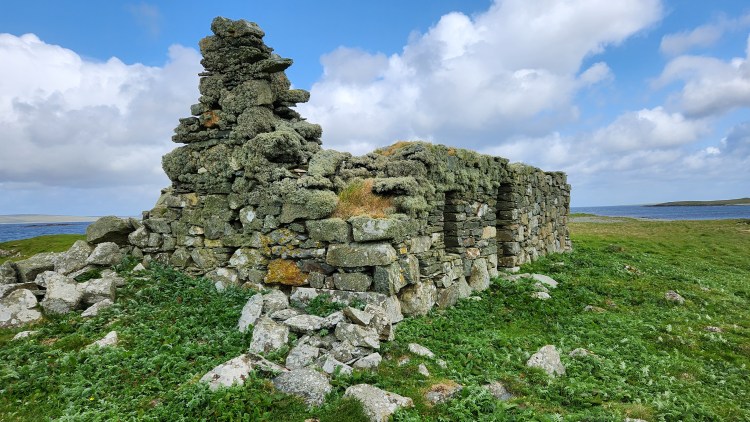
Many stone ruins dot the islands, too challenging to renovate for homes, especially with the cost of transporting materials so far which can involve multiple ferry crossings. However, the Storm Petrels on Mousa don’t have that worry – they nest in the tumbledown walls and an old broch (an Iron Age drystone tower) on Mousa, their cries eerily emanating from the nooks and crannies.
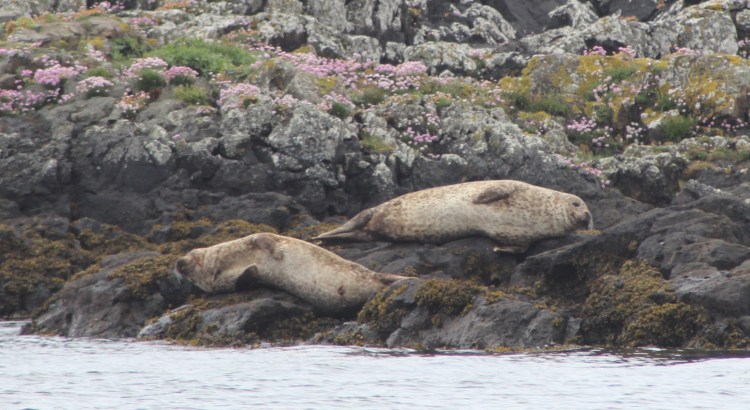
We were fortunate enough to see seven otters, at different locations, during my week of exploring, though my camera was inadequate for capturing them. Still, I wasn’t disappointed, watching them ripple over rocks to their holt (den) or dive with barely a splash to catch fish and octopus. Seals basked on rocks despite the lack of sun, with youngsters swimming in sheltered pools.
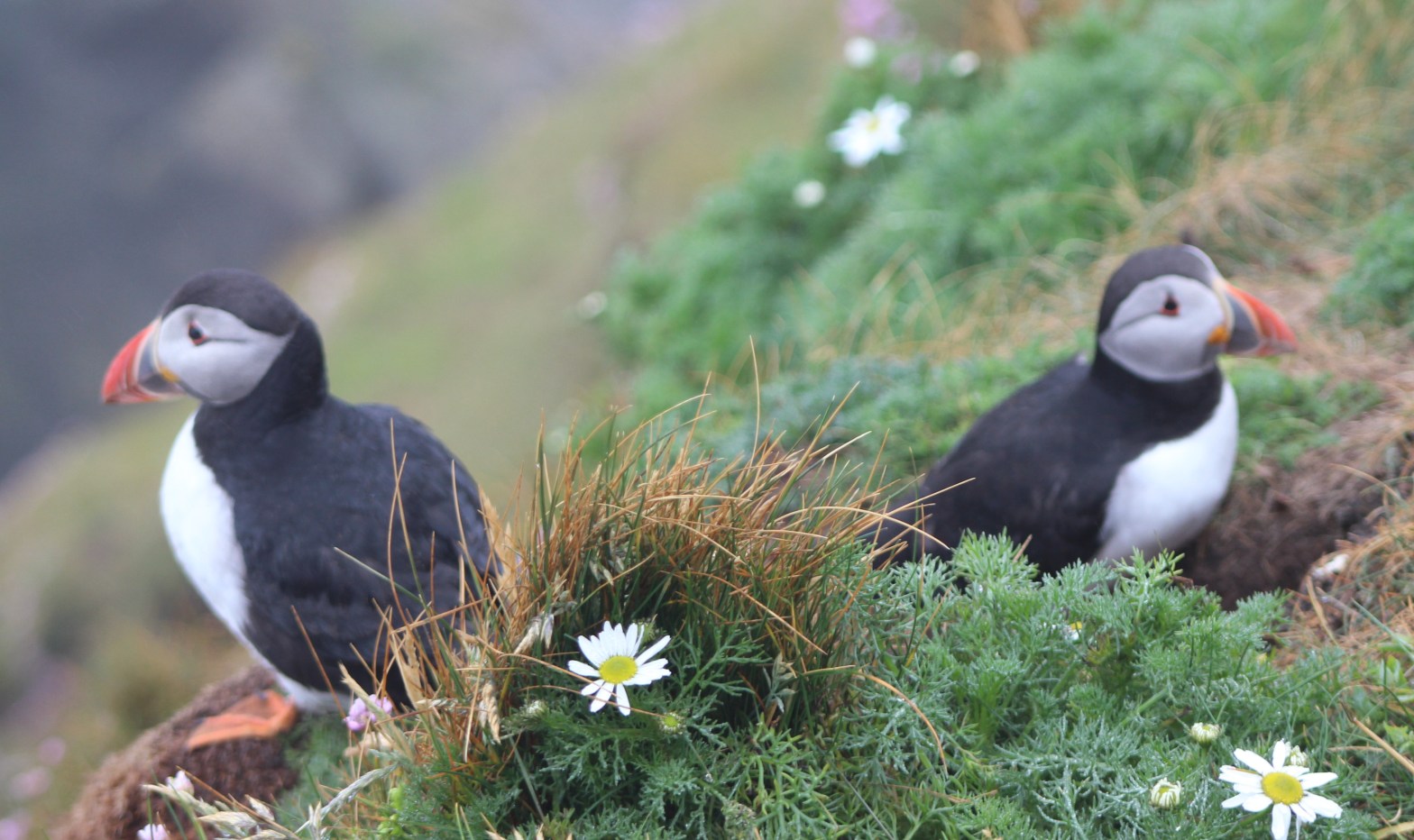
And everywhere, birds birds birds. Great skuas hassling arctic terns, oystercatchers wading the shoreline, curlews parading the moors, swans guarding their cygnets…but best of all for me were the puffins. These charismatic birds with their multi-coloured beaks permitted us within metres of them, though the risk of us falling from the cliff edges was their best protection. They’d pop in and out of burrows in the cliff face, carrying sand eels for their chicks or grass to line their nests, waddling like penguins with their bright orange feet.
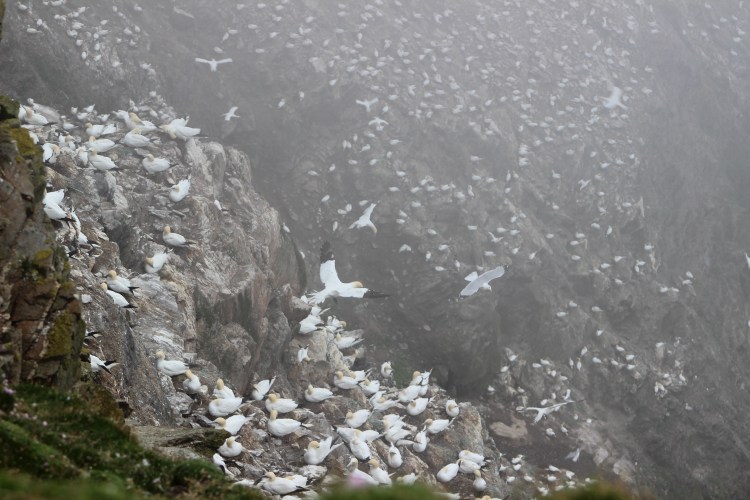
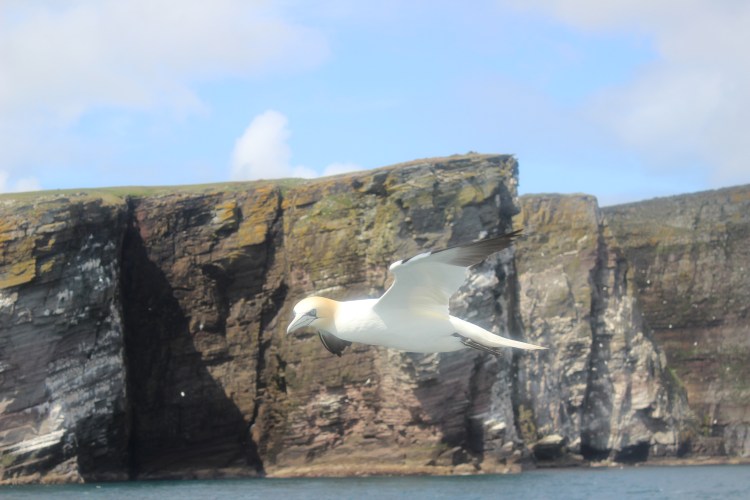
Another highlight was the gannets. Colonies of tens of thousands of birds nesting at beaks-length away from each other on guano-covered cliffs. Our skipper, Phil, of Shetland Seabird Tours, was another informative guide, who fed the gannets to enable us to encounter them at close quarters. To experience a wild bird flying only a metre away from you head, snatching mackerel out of the air, is an amazing experience.
Thanks to Shetland Nature for organising my trip. Excellent service and value for money.
I highly recommend a trip to Shetland for lovers of nature. Just make sure to pack warm waterproof clothes!
 Paula Boer
The photos are beautiful. You can almost feel the place.
LikeLike