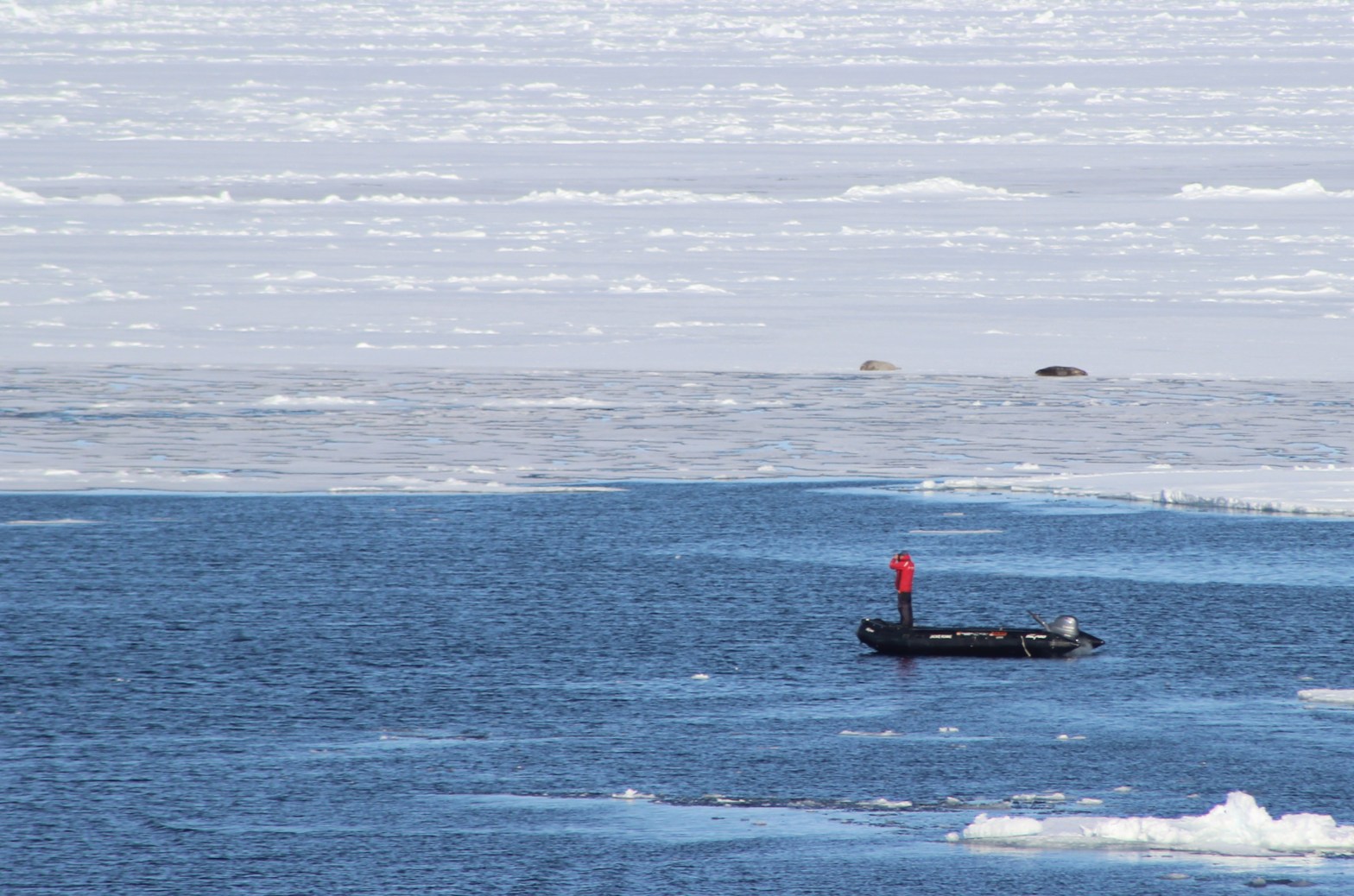
No, I don’t mean sausages made from polar bear meat! I mean what they eat, creatures with rich fat to see a bear through months of starvation, such as seals.
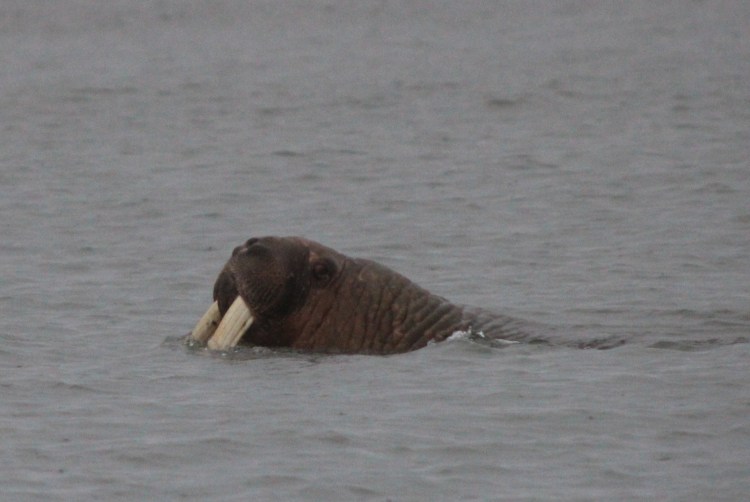
It was only on my recent trip to the Arctic that I learned that walruses are related to seals, being pinnipeds (which means fin-footed). Obvious once someone points it out, but even more so when I witnessed a walrus without tusks, after seeing their close relative the bearded seal. Both male and female walruses (bulls and cows) use their tusks for raking the seafloor in the search for food such as clams. The bulls also use them for fighting and showing dominance – the larger the tusk, the more likely the bull is to have mating rights.


Losing one or both tusks is serious as these elongated canines don’t regrow, and drops the walrus in the hierarchy of the herd as well as making it harder for them to find food.
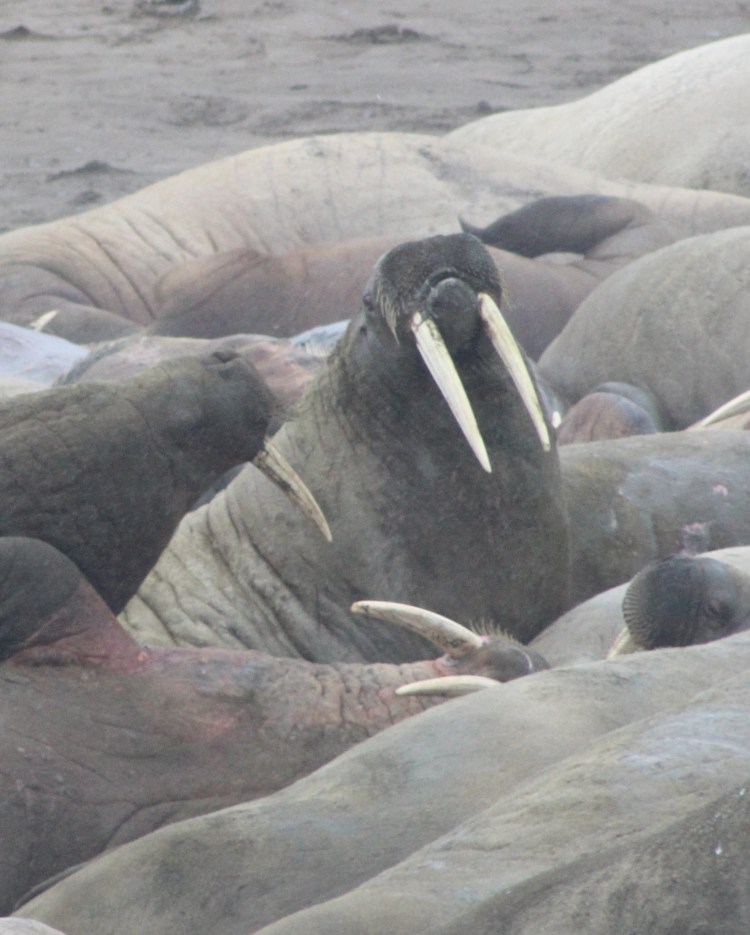

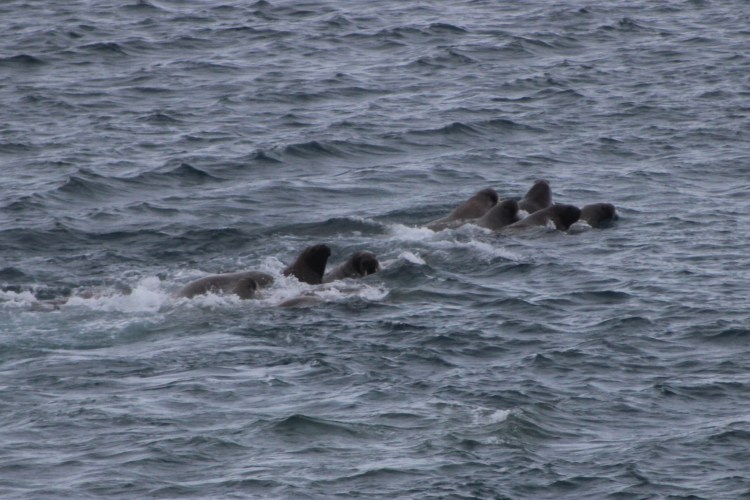
These giant tubes of blubber (walruses and seals) are affectionately known by our guides as ‘polar bear sausages’, though it is much harder for a polar bear to catch a walrus than a seal, and even a seal only falls victim to a polar bear’s huge paws and jaws less than 10% of the time. Ungainly on land, they swim with grace, barely making a ripple on the sea. Young walruses stick together in the water. On land, the herd congregates in a tightly-packed group to conserve body heat, for protection and because they are highly social.
In the search for polar bears, our guides looked out for seals basking on ice, as polar bears can smell their prey from many kilometres away. Whenever we went on land, armed guards stood ready to warn us of any polar bears approaching so that we could hasten back to our ship. Polar bears are extremely dangerous to people, despite looking soft and cuddly.
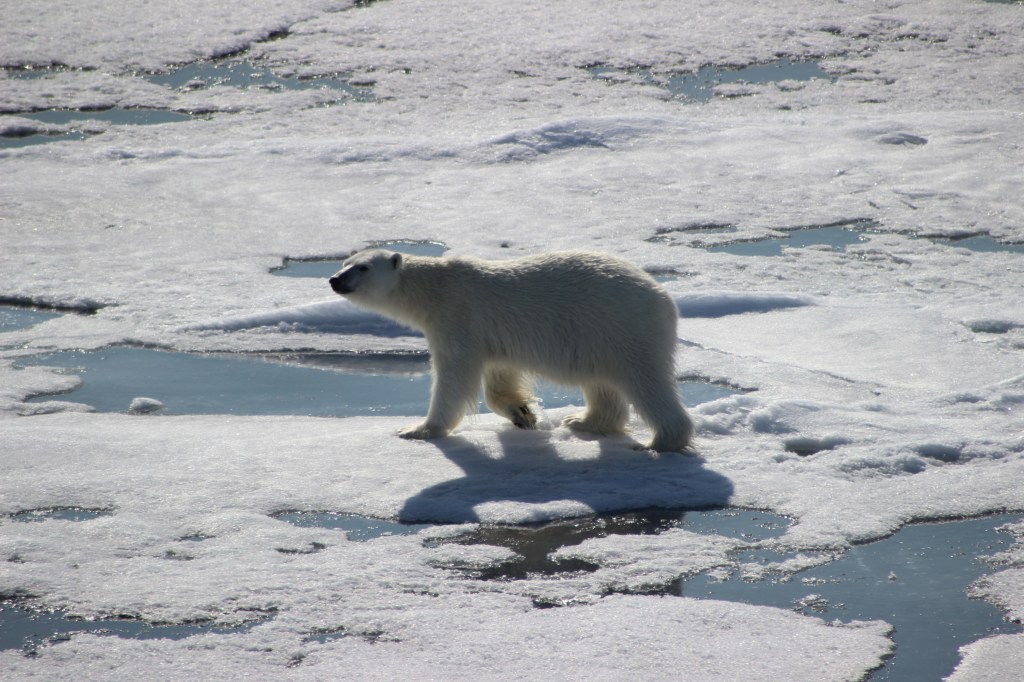
It is the natural order of life that predators eat prey in the cycle of life, yet all these magnificent animals are threatened by climate change. We were less than 500 nautical miles from the North Pole before we found pack ice, which polar bears rely on for their livelihoods. Everywhere we travelled around Svalbard, glaciers were melting at an alarming rate.
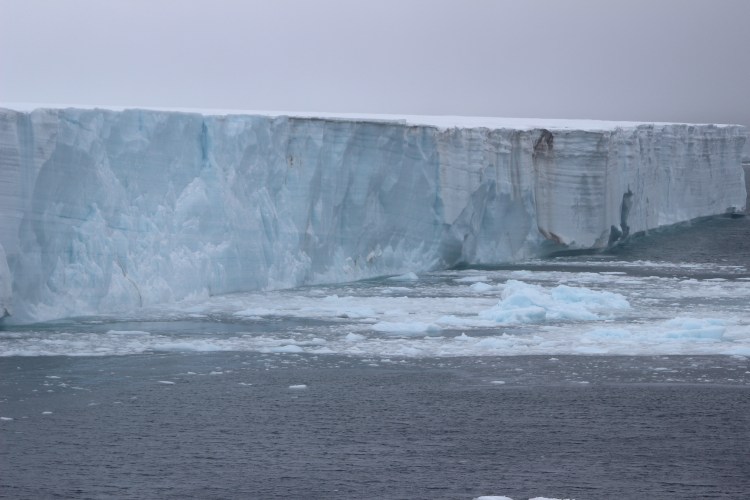
The Brasvellbreen Ice Wall, the longest in the northern hemisphere, extends over 160kms. As we cruised by, huge sections crashed into the sea, waterfalls cascaded from the ice like tropical rivers, and brash ice cloaked the sea. One of my fellow travellers, Craig Leeson, made a short clip, highlighting the dangers to the rest of the planet.
As much as I thrilled at being in the Arctic and satisfying my life-long dream of seeing polar bears in the wild, the impact of climate change was scary. I suspect that polar bears will have nowhere to hunt for their ‘sausages’ in my lifetime.
Please consider supporting a moratorium on human activity in the Arctic by signing the petition at this link or by using the QR code below. The more people who add their voices, the more chance we have of gaining a pause on activities like deep-sea mining and industrial fishing to allow the ice to heal and give science and solutions a chance to develop. Thank you.

 Paula Boer
Amazing pictures – Informative – Petition signed
LikeLike