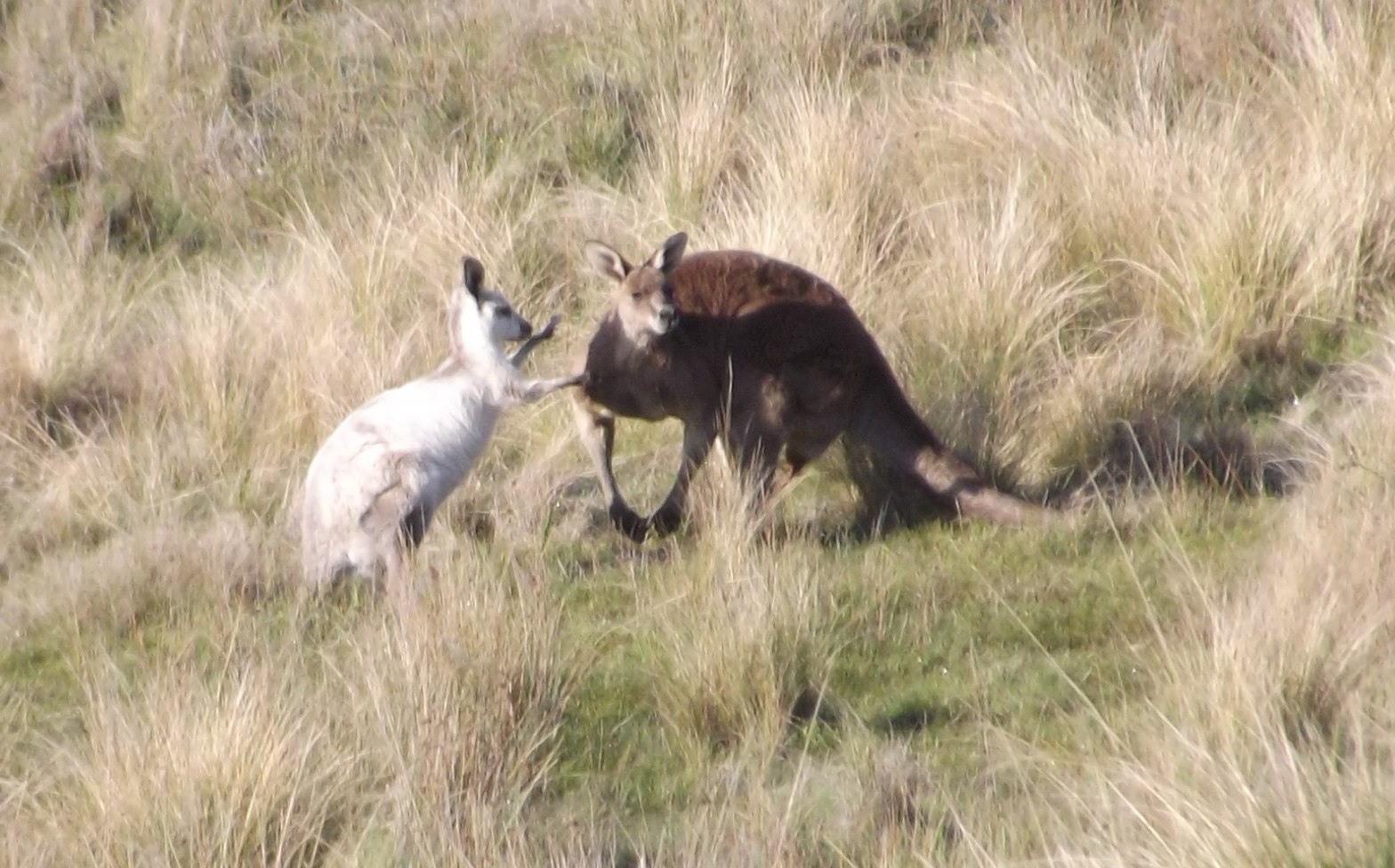
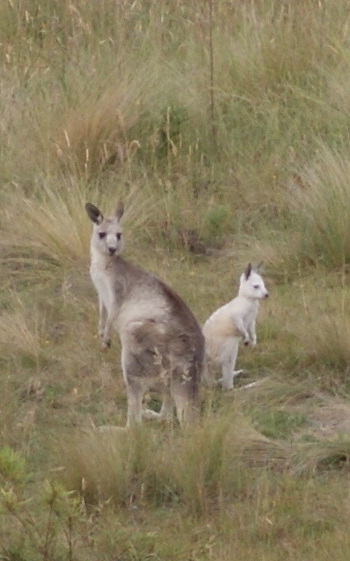
Twins are not uncommon in Eastern Grey Kangaroos, though both siblings rarely survive to adulthood. But white twins? When I first saw them in my garden in 2014, I was amazed. Of course I had to name them, so Snowy and Creamy (yes, I know, not my best imagination at work) have become part of my life.
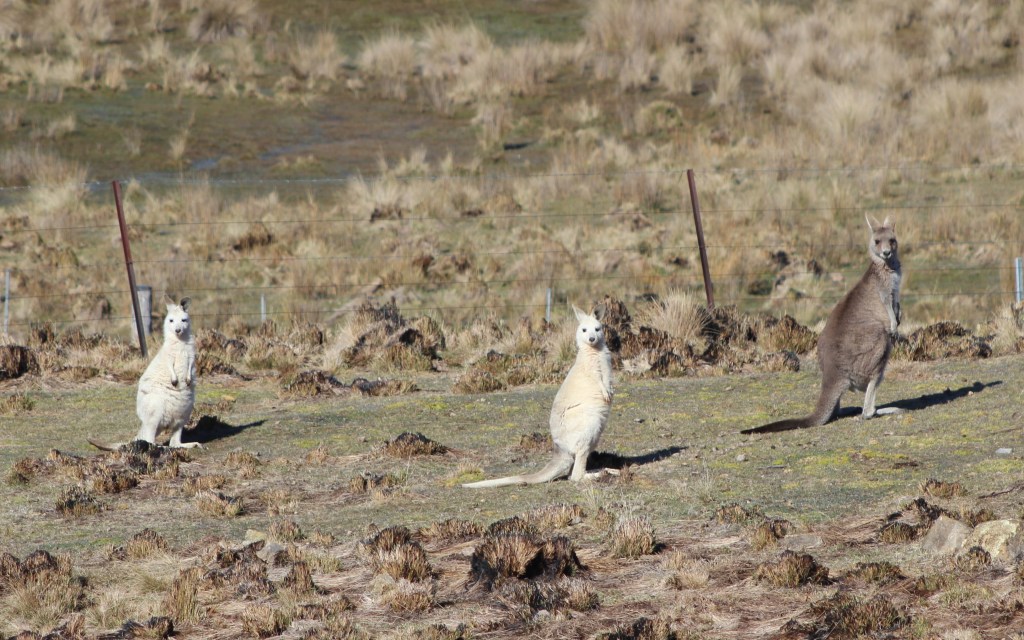
I could see that they weren’t albino, as they had black ears, eyes, and paws. The tips of their tails were also dark. As they grew, this darkness spread up their tails and spine in a thick stripe, eventually spreading over their hind legs and up their bodies. I learned that their condition was leucism, a genetic variance that results in partial loss of pigment at a cellular level.
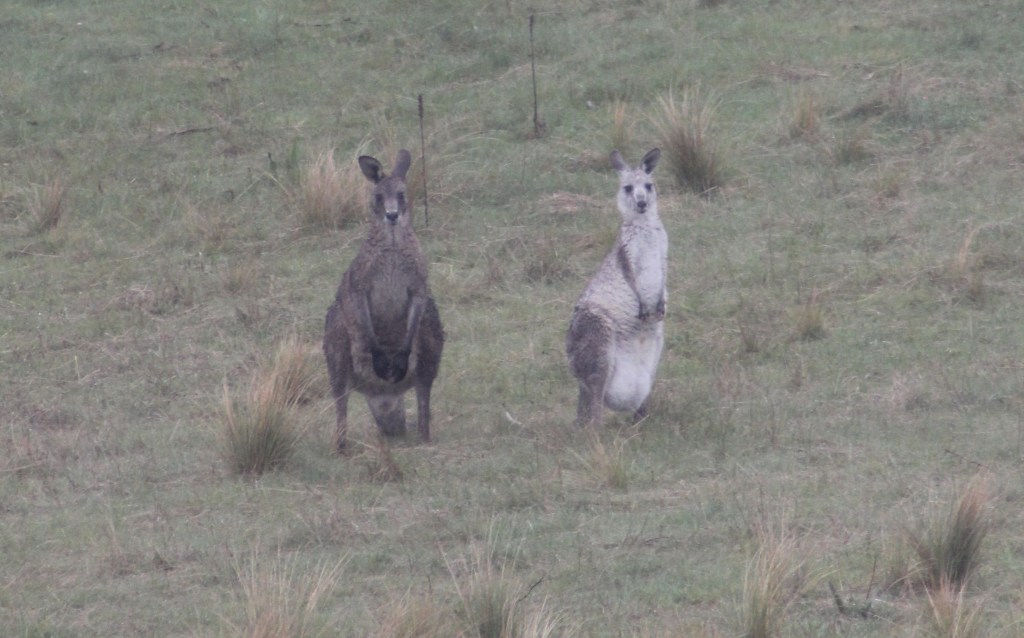
As the twins grew older, I saw them less. Then one spring, a female roo with a white band across her middle, whom I named 50/50, turned up with a white head poking out of her pouch. I later realised that the mother was Snowy, turned half grey. I named her first joey Dazzle, as she was so bright when out of the pouch she stood out as if radiating light.
I didn’t see Creamy very often. He had become a dominant male, practice boxing his peers for when his time to mate came. Instead of growing grey, he became golden then brown. When the devastating bushfires of 2020 swept through, I was worried he had been killed, but there is a large brown buck (see header image) on the north of my property who I hope is Creamy.
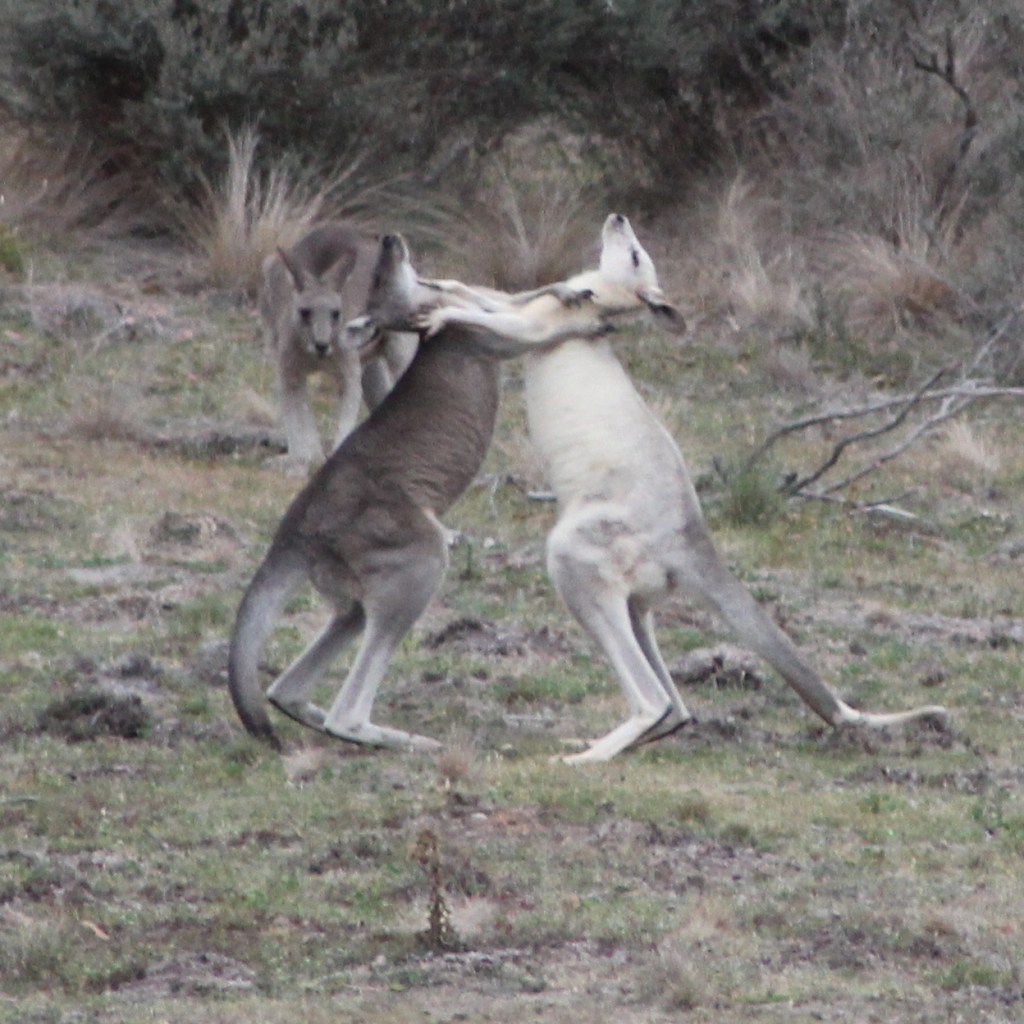
Snowy (or 50/50) has had a white joey every year. Dazzle has also gone on to produce white joeys (there is now Sparkle and Whitey). The females seem to stay around while the males disperse.

I am so thrilled to have the privilege of these animals in my life, and never cease to feel delighted when I spot a white body sleeping among the grasses or bounding through the trees. I know the grey kangaroos are gorgeous too, but there is something about those who stand out from the mob that endears them to me. May they ever live safely here.
 Paula Boer
They are so beautiful. Great post.
LikeLike